Hardy Almond
Explore our collection of hardy almond trees, featuring a unique selection of cold-hardy cultivars for the home orchard and garden. From resilient selections suited to colder climates to hard-to-find varieties, our collection offers almond enthusiasts an opportunity to grow this beautiful and distinctive nut tree at home.
Cold-Hardy & Resilient
Hardy almonds offer an exciting opportunity for gardeners looking beyond the traditional almond-growing regions. With careful variety and site selection, these unique trees can bring the beauty and potential of homegrown almonds to colder climates.
Beautiful Spring Blooms
Before producing their nuts, almond trees put on a beautiful display of delicate blossoms in early spring. Their flowers are one of the first signs of the coming growing season—and one of the reasons almonds make such attractive additions to the home landscape.
Delicious Homegrown Nuts
There is something especially satisfying about harvesting your own almonds. Allow the nuts to mature and dry properly, then enjoy your homegrown harvest for snacking, baking, cooking, and more.
Distinctive
With their delicate spring blossoms and unusual harvest, hardy almonds bring something truly distinctive to the home orchard. They’re a beautiful way to grow something you won’t find in every backyard.
Shop All Cold-Hardy Almond Varieties
Browse our collection of hardy almond trees and discover unique selections chosen for the home orchard and garden. With different characteristics, growing habits, and nut qualities to explore, there’s something special about each variety. Take a look through our selection and find the hardy almond that’s right for you.
If you love Hardy Almonds, you’ll love these!
FAQ
Can I grow these hardy almonds in a cooler climate?
Yes. All the cultivars that BBN carries were selected or developed with greater cold-climate adaptability than many conventional almond varieties. However, spring frost remains an important consideration because almond flowers appear early and can be damaged by freezing temperatures.
Do I need two almond trees?
No. All the cultivars that BBN carries are reported as self-fertile or self-pollinating selections. A second compatible almond may still be beneficial for pollination and fruit set, but it is not required for these varieties to produce a crop.
Where should I plant a hardy almond?
Choose a location with full sun and well-drained soil. Avoid low areas where cold air settles, and whenever possible choose a site with good air drainage to reduce the risk of spring frost damage.
When do hardy almonds bloom?
Bloom time varies by variety, but late or later bloom is an important characteristic of several cold-hardy almond selections. Javid’s Iranian is specifically described as late blooming, while All-in-One is also recognized for later bloom than many traditional almonds. Later bloom can help reduce—but does not eliminate—the risk of spring frost damage.
When can I harvest almonds?
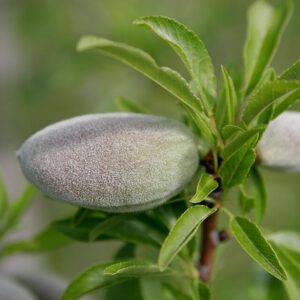
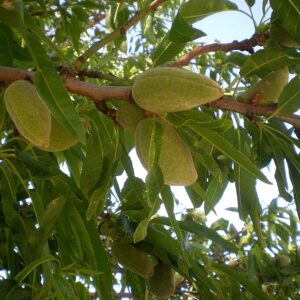
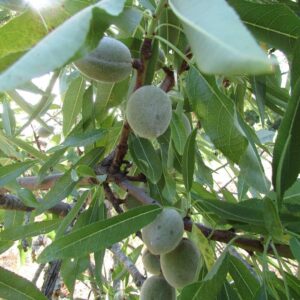
Harvest timing varies by variety and growing conditions. As almonds mature, the outer hull dries and begins to split, signaling that the nuts are approaching harvest. The nuts can then be harvested, hulled, and properly dried for storage.
How long before my almond tree produces nuts?
Young almond trees need time to establish before producing substantial crops. Bearing age varies with the variety, rootstock, tree age, and growing conditions, so patience is important while your tree develops.
Why didn’t my almond tree produce nuts?
Spring frost is one of the biggest possibilities, particularly if freezing temperatures occur during bloom. Pollination, tree age, winter injury, and growing conditions can also affect production.
Growing Tips for Success
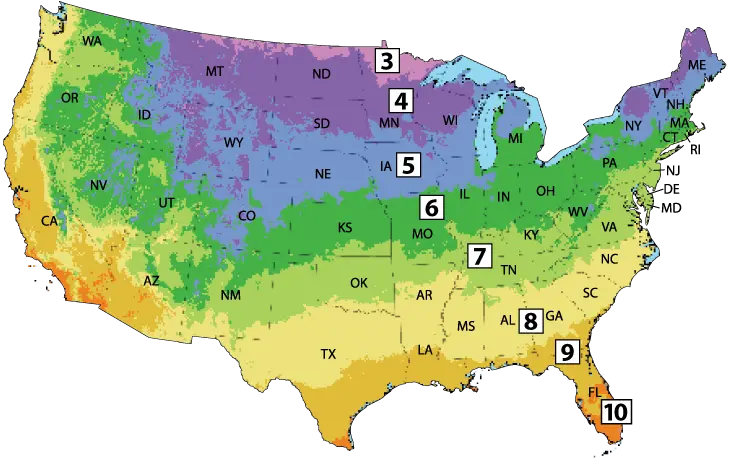
Hardy Almonds Grow Great in Zones 5-9!
%