Jujubes
Explore our collection of jujube trees, featuring unique and exceptional varieties for the home orchard and garden. From crisp, sweet fruit enjoyed fresh to naturally dried treats, our collection offers gardeners an opportunity to grow this unusual and versatile fruit tree at home.
Versatile
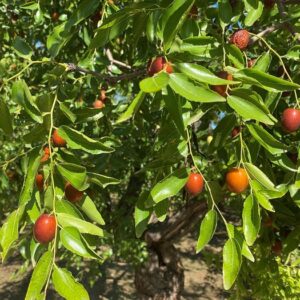
These fruits can be enjoyed in several different ways. Eat them fresh when they’re crisp, allow them to fully ripen and soften, or dry them on the tree for a naturally sweet, date-like treat.
Sweet
Fresh jujubes have a naturally sweet flavor and crisp texture, often compared to an apple. As the fruit ripens further, it becomes softer and sweeter, and when left to dry on the tree it develops a chewy, date-like texture.
Medicinal
Jujubes have been valued for centuries in traditional Chinese medicine and remain an important traditional food and herbal ingredient throughout Asia. Their long history of traditional use is part of what makes this unique fruit tree so interesting to grow.
Drought-Resistant
Once established, jujube trees are remarkably tolerant of heat and dry conditions. They still benefit from regular water while young and during extended periods of drought, but their ability to thrive with less water makes them an especially resilient choice for the home orchard.
Shop All Jujube Varieties
Browse our collection of jujube trees and discover unique selections for the home orchard and garden. Whether you’re looking for crisp fruit to enjoy fresh or varieties with qualities suited to drying, each jujube offers something special to discover. *More cultivars to come in the future.*
FAQ
What does a jujube taste like?
Fresh jujubes are crisp and sweet, with a flavor often compared to an apple. As they ripen and dry, they become softer, chewier, and more date-like.
How do you eat a jujube?
Jujubes can be eaten fresh while they are crisp, or allowed to ripen further and become softer and sweeter. They can also be dried on the tree and enjoyed as a naturally sweet, chewy fruit.
Are jujubes easy to grow?
Jujubes are relatively easy to grow once established and are well adapted to heat, sun, and dry conditions. They prefer full sun and well-drained soil and generally require less water than many other fruit trees.
Do jujubes need another tree for pollination?
Many jujube varieties are self-fruitful, so a single tree can produce fruit. Planting more than one variety may still improve fruit production in some situations.
When are jujubes ready to harvest?
Jujubes can be enjoyed at different stages of ripeness. They are crisp and apple-like when harvested earlier, while more mature fruit becomes softer and sweeter. Fruit can also be left on the tree to dry and develop a chewy, date-like texture.
Can jujubes be dried on the tree?
Yes. One of the unique qualities of jujube is that mature fruit can continue drying on the tree, gradually becoming wrinkled and chewy while retaining much of its sweetness. They can also be dried in a dehydrator if picked once they have turned brown.
How big does a jujube tree get?
Jujube size varies by cultivar and growing conditions. They can develop into small to medium-sized trees, so give them adequate room to mature and spread.
Are jujubes drought tolerant?
Yes. Established jujube trees are notably drought tolerant and well suited to hot, dry conditions. Young trees still need regular moisture while their root systems become established.
Growing Tips for Success
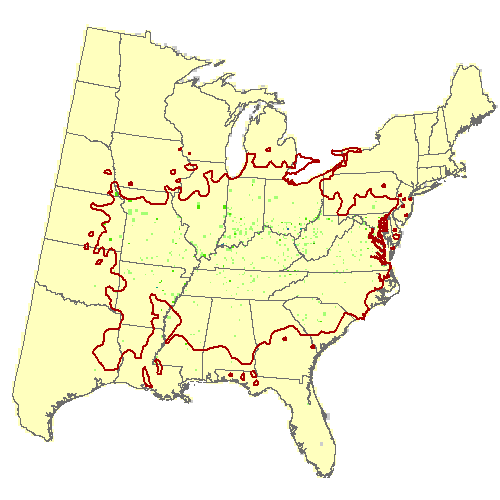
Jujubes Grow Great here!
%