
Mulberries
Explore our collection of mulberry trees, featuring a diverse selection of unique and exceptional cultivars for the home orchard and garden. From classic favorites to distinctive varieties, our collection offers mulberry enthusiasts an opportunity to grow these productive fruit trees and enjoy their sweet, flavorful berries at home.
Juicy
Mulberries are known for their exceptionally juicy, blackberry-like fruit. Depending on the species and cultivar, berries can ripen to shades of red, purple, black, or even white, with flavor ranging from sweet to pleasantly tart.
Sweet
Fully ripe mulberries can be wonderfully sweet and flavorful, making them excellent for eating fresh as well as using in pies, jams, preserves, and other recipes. Different cultivars offer their own distinctive fruit characteristics.
Productive
Mulberry trees can produce abundant crops once established, with fruit typically ripening over a period in early to mid-summer. The timing, fruit size, color, and productivity vary among species and cultivars.
Versatile
Mulberries can be enjoyed fresh or used in a variety of culinary preparations, while the trees themselves can serve as productive additions to a home orchard or garden. Their adaptable nature makes them useful in a range of growing situations, depending on the species and cultivar
Looking for a Different Variety?
Don’t see the variety you’re looking for? Check back later this autumn when our winter sales open for bare-root trees shipping in Spring 2027. Additional varieties will be added to our seasonal bare-root selection.
Shop All Mulberry Varieties
Browse our selection of mulberry varieties, including distinctive cultivars selected for fruit quality, flavor, productivity, and performance. Each variety has its own characteristics, giving home orchard growers plenty of options for finding a mulberry suited to their garden, growing conditions, and goals.
-
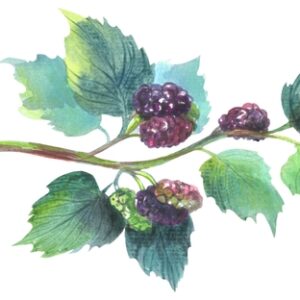
Beautiful Day Mulberry
Price range: $39.99 through $49.99 -
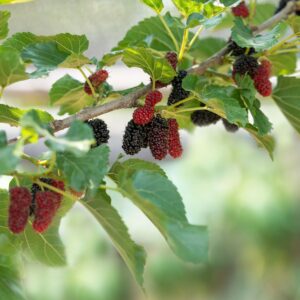
Early Bird Mulberry
$49.99 -
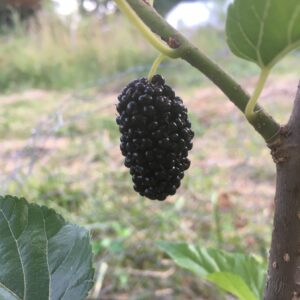 Out of Stock
Gerardi Dwarf Mulberry
Price range: $39.99 through $59.99 -
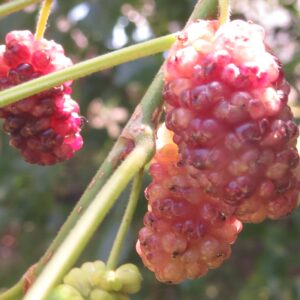
Honeydrops Mulberry
$49.99 -
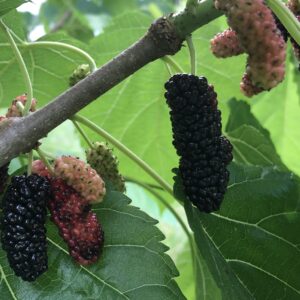 Out of Stock
Illinois Everbearing Mulberry
-
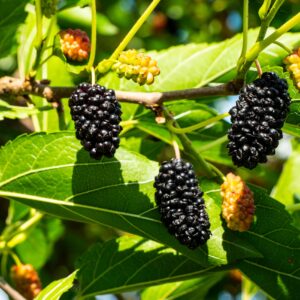 Out of Stock
Kokuso Mulberry
$39.99 -
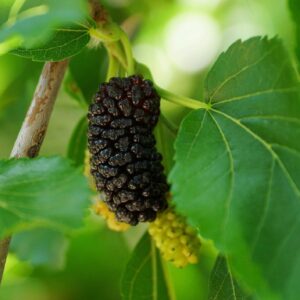 Out of Stock
Miss Kim Mulberry
Price range: $39.99 through $59.99 -
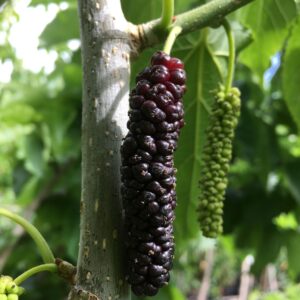
Pakistan Mulberry
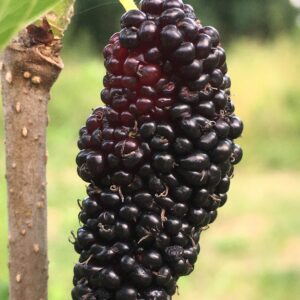
Price range: $44.99 through $54.99 -
 Out of Stock
Resilia Mulberry
Price range: $39.99 through $59.99 -
Rupp’s Romanian Mulberry
$49.99 -
Out of Stock
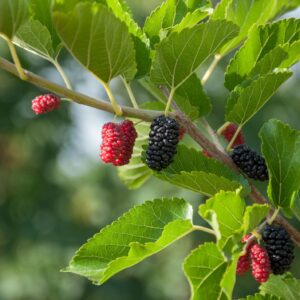
Shangri La Mulberry
$49.99 -
 Out of Stock
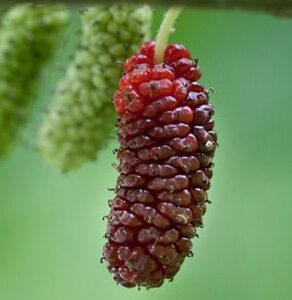
Silk Hope Mulberry
$49.99 -
 Out of Stock
Sweet Beginnings Mulberry
Price range: $39.99 through $59.99 -
Viola’s Lavender Mulberry
$49.99
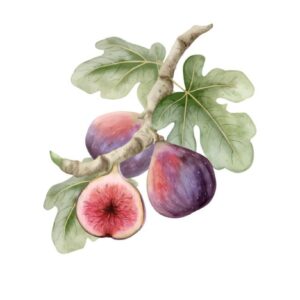
If you love Mulberries, you’ll love these!
FAQ
What do mulberries taste like?
Fully ripe mulberries are sweet and juicy, with flavor that can range from mild and sweet to rich and pleasantly tart depending on the species and cultivar. The fruit resembles a slender blackberry, but mulberries have their own distinctive flavor and texture
When do mulberries ripen?
Mulberries generally ripen from late spring into summer, although the exact timing varies by species, cultivar, and growing conditions. Fruit can ripen over an extended period rather than all at once, so regular harvesting may be necessary when the tree is producing heavily.
Do I need two mulberry trees to get fruit?
All of the cultivars that Beautiful Beginnings Nursery carry will get fruit as a single tree.
How do I know when a mulberry is ripe?
Ripe mulberries develop their characteristic color for the variety and become soft and juicy. Depending on the type, ripe fruit may be red, deep purple, black, or white. Because ripe mulberries are very delicate, they are best harvested gently and enjoyed or processed soon after picking. One of the best ways to harvest is by lying a tarp or sheet beneath the tree and shaking the fruits down.
How large do mulberry trees get?
Mature size varies considerably among mulberry species and cultivars. Some can become large shade trees, while others are more compact. Mulberries take well to being prunned and can be maintained at a smaller size through yearly pruning.
Are mulberries good for a home orchard?
Mulberries can be excellent additions to a home orchard because they are productive, adaptable trees that can provide abundant fruit once established. They also attract birds and other wildlife. Because ripe fruit can stain hard surfaces, choose a planting location where fallen fruit will not create a problem on patios, walkways, or driveways.
Growing Tips for Success
Choose the Right Location
Mulberries grow best in full sun and well-drained soil, although established trees can tolerate a range of soil conditions. Choose a location with plenty of room for the tree to develop, since some mulberries can become large trees. Good air circulation and adequate sunlight can support healthy growth and fruit production. Young trees benefit from consistent moisture while they become established.
Pollination and Planting
Mulberry trees are self-fertile and, therefore, do not require a second tree in order to bear fruit. However, having more than one variety generally increases fruit yield and size. If you are planting more than one, it is important to give the trees adequate space. Dwarf and weeping varieties generally require 6-10 feet between trees while semi-dwarf and standard size mulberries need 15-20 feet unless you plan to keep them pruned to a smaller size.
Provide Adequate Water and Mulch
Young mulberry trees benefit from consistent moisture as they become established, particularly during hot or dry weather. Water deeply when the soil begins to dry rather than relying on frequent, shallow watering. Organic mulch can help conserve soil moisture, moderate soil temperatures, and reduce competition from weeds. Keep mulch away from direct contact with the trunk, and avoid keeping the soil continually saturated.
Signs of Underwatering and Overwatering
Young mulberry trees are more sensitive to drought than established trees, so watch the soil and the tree during hot or dry periods. Wilting, drooping leaves, and dry soil can indicate that a tree needs water, while persistently wet soil can contribute to root problems. Water deeply when needed and allow excess water to drain rather than keeping the root zone continually saturated.
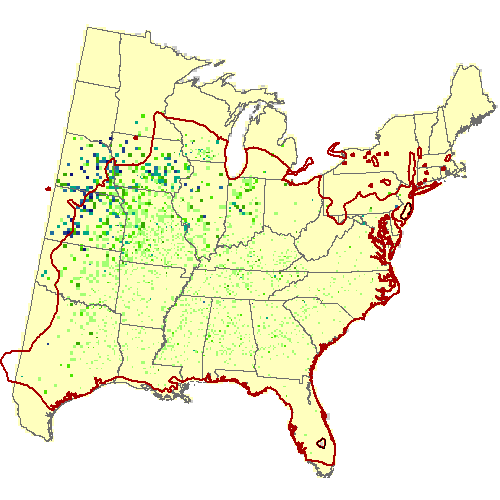
Mulberries Grow Great Here!
%